Cold, Dark, and a Little Damp: Storing a Harvest With No Electricity At All
Before refrigeration, families kept food fresh for months with nothing but the right corner of the house. The rules they worked out have not changed, and you do not need a dug cellar to use them — a cool basement corner, an insulated garage cabinet, even a buried barrel will hold a surprising share of a harvest.
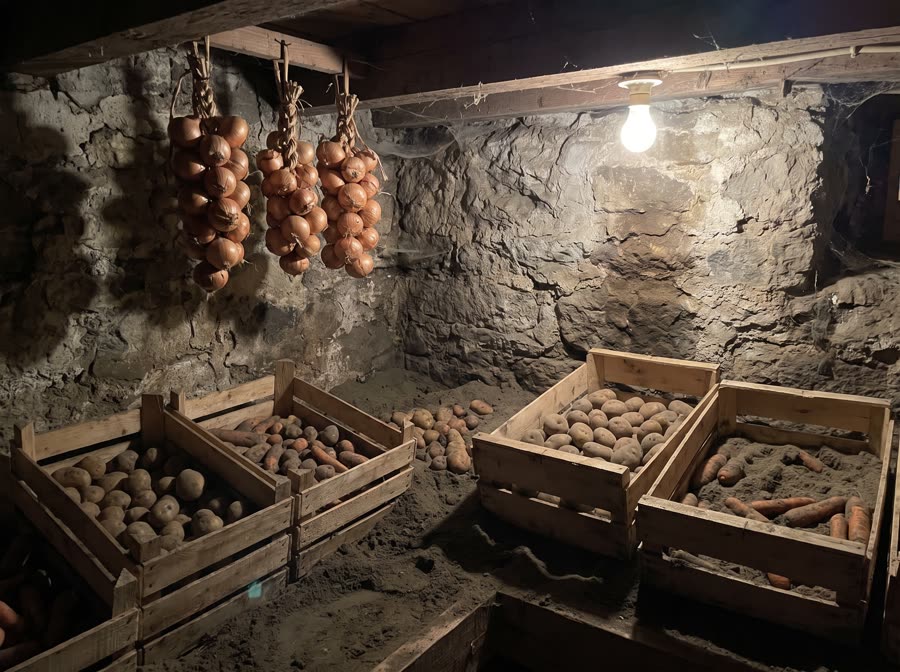
Three rules cover most of it
Potatoes: cold, dark, and dry — light turns them green and bitter. Carrots and beets: cold and damp; bed them in a crate of barely-moist sand and they hold until spring. Onions and garlic: cool and dry with air moving; braid them or use mesh bags, never plastic.
The one thing that ruins it
Storing bruised produce. One damaged potato takes the crate with it. Cure everything a week after harvest, store only the flawless, and eat the rest first — grandmother's sorting table was the real preservation technology.
Check the corner monthly, pull anything soft, and a September harvest is still feeding the family in February — no compressor, no electric bill, no single point of failure.